ABOUT NATASHA ACE, MBA
I didn't set out to become a private practice strategist.
I was trying to buy a home.
At 19, I was earning $7.25 an hour in an optometrist's office. I knew a bank would not look twice at that income, so I took a second job transcribing medical files-the old-school way, foot pedal and headphones included.
01 ⋅ THE BEGINNING
The job became the apprenticeship I didn't know I was taking.
The clinician I worked for noticed how I was organising the practice and offered me a bigger role. I did not ask for a careful little increase. I reached for the moon and asked for $12 an hour.
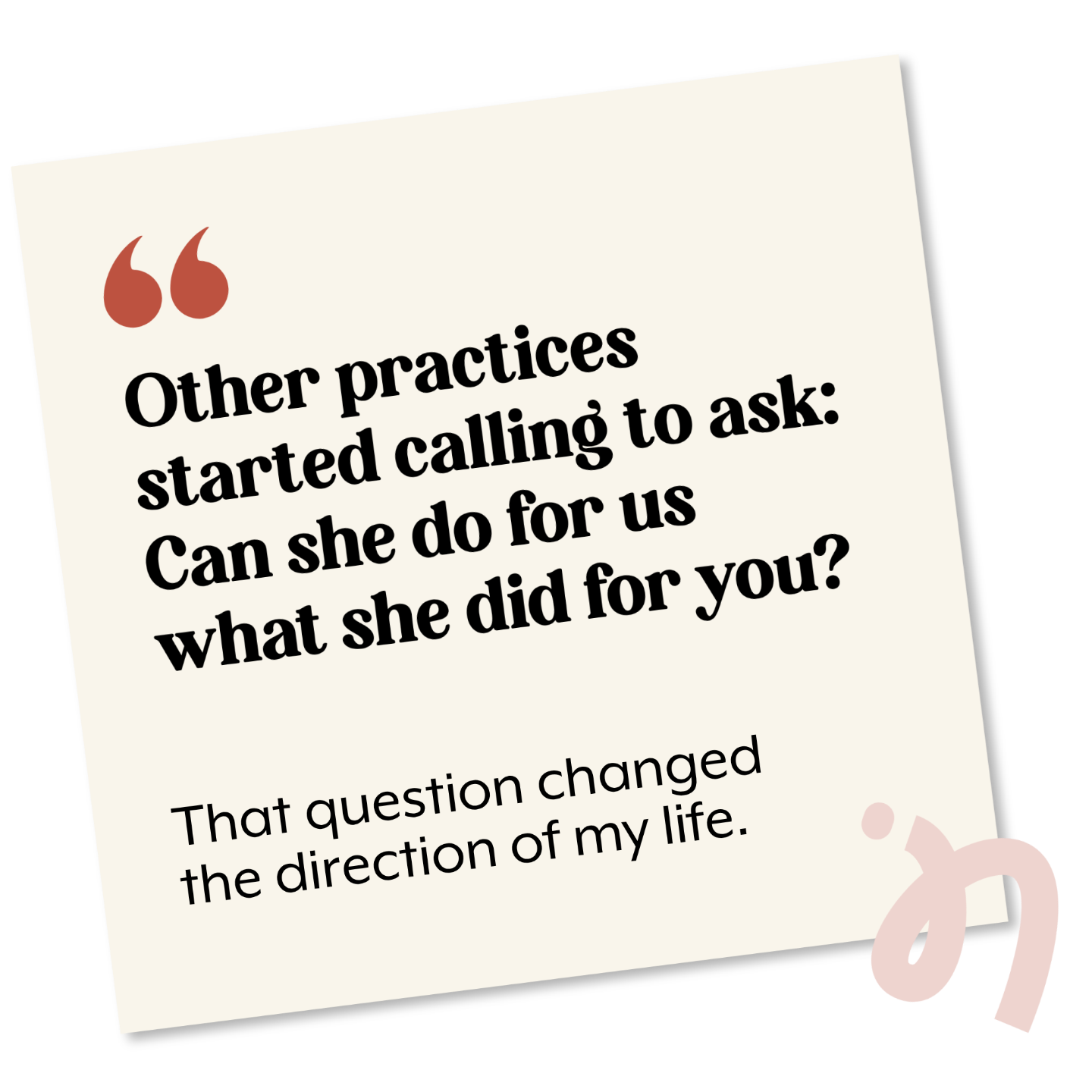
Within a couple of years, other practices were calling. Then the forensic and clinical psychologist I worked for and his wife -a private university professor-sat me down. I thought I was in trouble.
Instead, they told me I had built a name for myself-and mentored me into starting my own company.
I was 21. The company came after the reputation, not before it.
02 ⋅ THE CHAPTERS THAT SHAPED THE WORK
19
$7.25 an hour
Working for an optometrist, with a very clear goal: earn enough for a bank to take me seriously.
21
A name before a company
After improving the operations around me, other practices began asking whether I could do the same for them.
23
Inside private practice
I established my own practice and supported pre- and postdoctoral psychology students.
27
Starting again
I moved from the United States to Australia and learned a new health system from the ground up.
Now
Strategy with lived depth
An MBA, two decades of practice work and one purpose: helping owners build practices that support the life they wanted.

I want you to live your best life.
My role as a private practice chaos tamer and business wrangler has restored peace of mind—and weekends—to thousands of practitioners over the last two decades. I know exactly what makes you exhausted the job you created for yourself, accidentally.
In the early days, seeing a wave of client inquiries and replies coming in feels fun and exciting. But very quickly, managing the endless team enquiries, checking an overflowing inbox, and trying to find the perfect time to return phone calls between sessions becomes a tedious, overwhelming weight. Precious time that should be spent on clinical excellence, practice strategy or your own life is completely consumed by operational noise.
You find yourself trapped in constant decision fatigue, acting as the default safety net for everything because the systems live only inside your head. You think you have a referral problem or a time-management problem, but what's actually happening is a strategic gap. Your practice is running on memory instead of infrastructure.
That is where I come in. I translate the business world and the clinical world so they can finally work together.

My Story is Simple.
The daughter of strict well-meaning parents, I grew up thinking that I had only one choice in life.
Go to school, get a good job, and build a stable life for myself. However, that world wasn't fit for purpose for me. I dropped out of university TWICE! And quickly realised I need a career that embraced my ADHD to design a life that I needed to thrive.
My own business journey started a little differently than most. At the age of 21, after being mentored by a Clinical Psychologist, I started my own consulting firm, opening several private practices across multiple disciplines.
By 23, I established my own private practice, providing intensive internships to pre- and postdoctoral level psychology students.
Then, at 27, I moved from the United States to Australia, completely immersing myself from scratch to learn the ropes, systems, and distinct cultural differences of the healthcare landscape here.
Since then, I’ve earned my MBA, run my own virtual assistant administration company, and worked internationally with thousands of clinicians.
I understand every single operational, financial, and cognitive layer of running your practice.

03 ⋅ WHY I STAYED
I could see brilliant clinicians carrying practices that were asking too much of them.
The clinical work was rarely the problem. The strain sat around it: decisions that lived only in the owner's head, admin teams without authority, clinicians without clear expectations, numbers that arrived too late and a client journey held together by memory.
I know the emotional weight of being responsible for the whole thing. I have opened practices, owned one, built a psychiatric clinic, worked across disciplines, started again in a different country and learned the Australian system from the ground up.
That is why I translate the clinical world and the business world until they can finally work together.
04 ⋅ WHAT I BELIEVE
Three beliefs sit underneath every strategy I build.
01
Admin is not overhead. They are your most underutilised revenue engine.
The dominant narrative in the healthcare industry is that only clinicians generate revenue, meaning admin teams must stay lean. This is a blind spot.
Your admin team is the operational infrastructure that directly protects your revenue. When they are improperly trained, private practice wastage happens through intakes, waived cancellation fees, and unmanaged rescheduling patterns.
When you invest in training them properly, you stabilise your revenue.
02
A successful practice needs 100% of the team members to be dispensable.
Your are completely exhausted because the entire blueprint of the business lives inside your head.
If the team has to constantly ask you what to do, or if decisions always escalate upward, you have become the emotional and operational bottleneck.
True structure means documenting and transferring that knowledge so the practice can function smoothly without any single person's constant intervention.
03
Modality bias is a baseline; business sustainability is a branch of clinical care.
Clinical excellence alone will not build a thriving, sustainable practice.
Because I'm not a clinician, I'm not indoctrinated by modality bias or registration board anxiety. I see the practice [and external governance bodies] through a fresh, polymathic brain.
True client care isn't just inside the therapy room; it requires psychologically safe, highly structured operational boundaries across the entire client journey. Stabilising your business fundamentals is how you protect both your team from burnout and your clients' continuity of care.
05 ⋅ WHAT MAKES THIS DIFFERENT
I am not here to hand you a motivational slogan and send you back to the same practice.
I give you the strategy, structure and team training to move responsibility out of your head and into the practice.
Systems that reduce decision fatigue
Teams with authority to act
Numbers that support better decisions
A client journey that works beyond good intentions
A practice with value beyond its owner
THIS PAGE IS ABOUT ME.
BUT THE REASON YOU ARE HERE IS PROBABLY ABOUT YOU.
You built a practice to create freedom and somewhere along the way, you became its most essential piece of infrastructure.
THE WORK, RECOGNISED
Strategy should change more than a spreadsheet.
It should give an owner breathing room, a team clarity and clients a more consistent experience of care.
WHERE DO YOU BEGIN?
Find out what your practice needs from you next-and what it is ready to hold without you.
The Practice Stress Test helps you see which capabilities are strong, which are costing you energy and whether your next step is focused support, membership or the Private Practice MBA.